1
The dynamic relationship between price adjustment and market equilibrium(价格调整与市场均衡的动态关系)
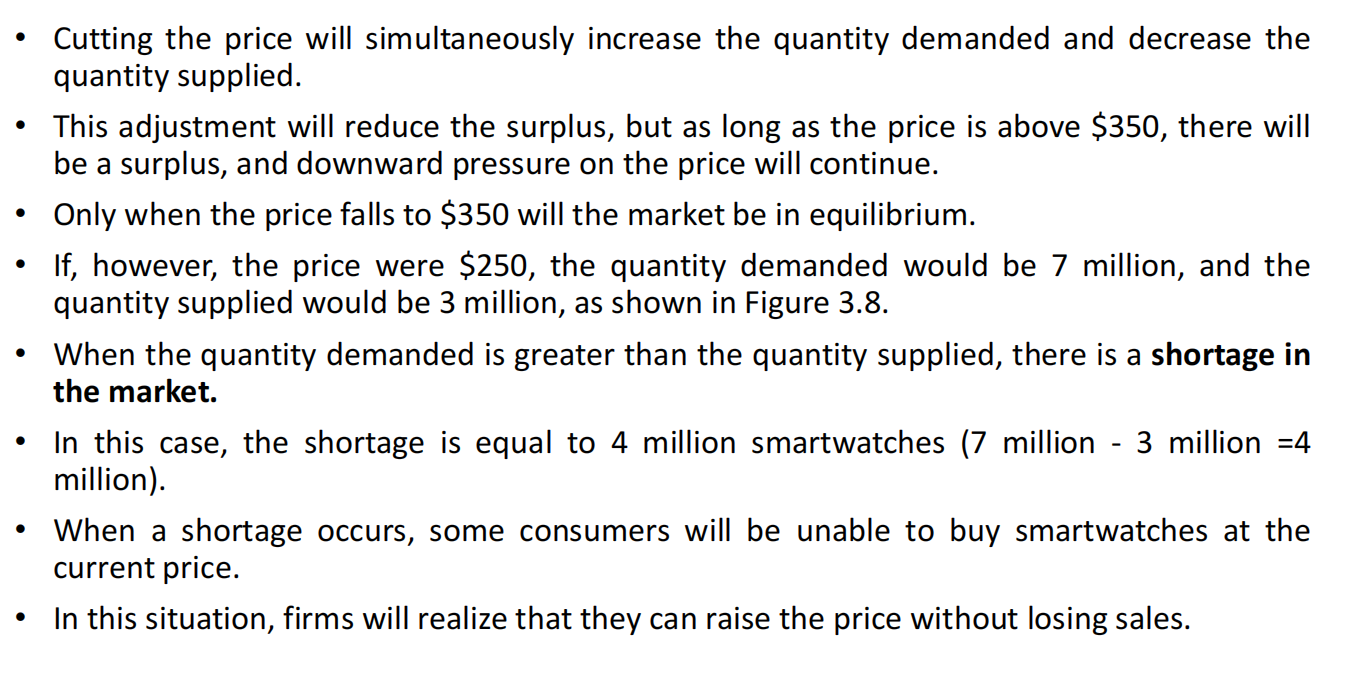
Cutting the price will simultaneously increase the quantity demanded and decrease the quantity supplied.
📖 点击查看译文
降低价格将同时增加需求量并减少供给量。
This adjustment will reduce the surplus, but as long as the price is above $350, there will be a surplus, and downward pressure on the price will continue.
📖 点击查看译文
这一调整将减少过剩,但只要价格高于 350 美元,市场上就会存在过剩,价格会继续承受下行压力。
Only when the price falls to $350 will the market be in equilibrium.
📖 点击查看译文
只有当价格降到 350 美元时,市场才会处于均衡状态。
If, however, the price were $250, the quantity demanded would be 7 million, and the quantity supplied would be 3 million, as shown in Figure 3.8.
📖 点击查看译文
然而,如果价格为 250 美元,需求量为 700 万,而供给量为 300 万,如图 3.8 所示。
When the quantity demanded is greater than the quantity supplied, there is a shortage in the market.
📖 点击查看译文
当需求量大于供给量时,市场上就会出现短缺。
In this case, the shortage is equal to 4 million smartwatches (7 million - 3 million = 4 million).
📖 点击查看译文
在这种情况下,短缺量为 400 万块智能手表(700 万 - 300 万 = 400 万)。
When a shortage occurs, some consumers will be unable to buy smartwatches at the current price.
📖 点击查看译文
当短缺发生时,一些消费者将无法以当前价格购买智能手表。
In this situation, firms will realize that they can raise the price without losing sales.
📖 点击查看译文
在这种情况下,企业会意识到他们可以提高价格而不会失去销售。
知识点列表与拓展 (Knowledge Points and Extensions):
1. Market Shortage (市场短缺)
-
解释 (Explanation):
A market shortage occurs when the quantity demanded exceeds the quantity supplied at a given price.
(市场短缺是指在特定价格下,需求量超过供给量的情况。)
-
例子 (Example):
At a price of $250, the quantity of smartwatches demanded is 7 million, while the quantity supplied is only 3 million, resulting in a shortage of 4 million smartwatches.
(当价格为 250 美元时,智能手表的需求量为 700 万,供给量仅为 300 万,导致 400 万块智能手表的短缺。)
-
拓展 (Extension):
Shortages tend to push prices up, as consumers compete for the limited available goods, and firms realize they can charge higher prices without losing customers.
(短缺通常会推动价格上涨,因为消费者会争抢有限的商品,企业会意识到可以提高价格而不会失去顾客。)
2
A Market that is Not in Equilibrium Moves Toward Equilibrium (一个不处于均衡的市场会朝均衡移动)
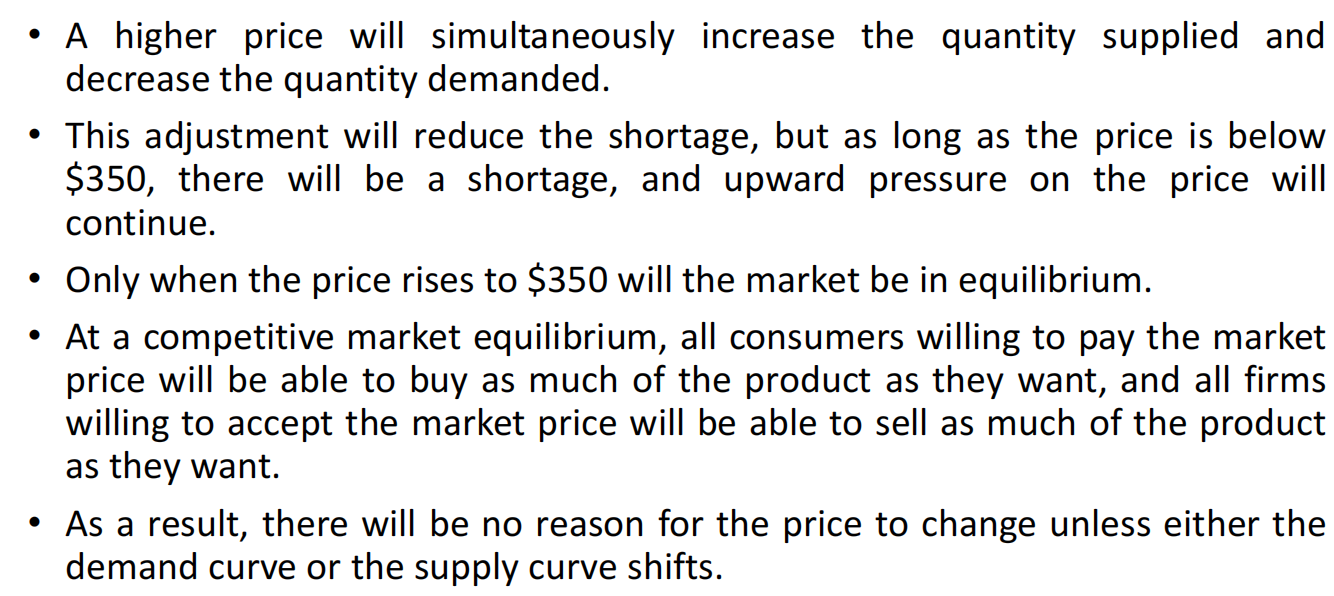
A higher price will simultaneously increase the quantity supplied and decrease the quantity demanded.
📖 点击查看译文
更高的价格将同时增加供给量并减少需求量。
This adjustment will reduce the shortage, but as long as the price is below $350, there will be a shortage, and upward pressure on the price will continue.
📖 点击查看译文
这一调整将减少短缺,但只要价格低于 350 美元,市场上就会存在短缺,价格会继续承受上行压力。
Only when the price rises to $350 will the market be in equilibrium.
📖 点击查看译文
只有当价格升至 350 美元时,市场才会处于均衡状态。
At a competitive market equilibrium, all consumers willing to pay the market price will be able to buy as much of the product as they want, and all firms willing to accept the market price will be able to sell as much of the product as they want.
📖 点击查看译文
在竞争性市场均衡下,所有愿意支付市场价格的消费者都能购买他们想要的商品数量,所有愿意接受市场价格的公司也能卖出他们想卖的商品数量。
As a result, there will be no reason for the price to change unless either the demand curve or the supply curve shifts.
📖 点击查看译文
因此,除非需求曲线或供给曲线发生变化,否则价格将没有变化的理由。
知识点列表与拓展 (Knowledge Points and Extensions):
1. Market Adjustment (市场调整)
-
解释 (Explanation):
When a market is not in equilibrium, price adjustments help move the market towards equilibrium by influencing the quantity supplied and demanded.
(当市场不处于均衡时,价格调整通过影响供给量和需求量帮助市场朝均衡移动。)
-
例子 (Example):
If the price is below $350, the shortage increases, pushing the price upward, which reduces the shortage and brings the market closer to equilibrium.
(如果价格低于 350 美元,短缺会增加,从而推动价格上升,减少短缺并使市场更接近均衡。)
-
拓展 (Extension):
Price adjustments in competitive markets occur when there is either a shortage or surplus, and they continue until market forces bring the price to the equilibrium point.
(在竞争性市场中,当出现短缺或过剩时,价格调整会发生,直到市场力量将价格带到均衡点为止。)
3
The Effect of Demand and Supply Shifts on Equilibrium (需求和供给变化对均衡的影响)
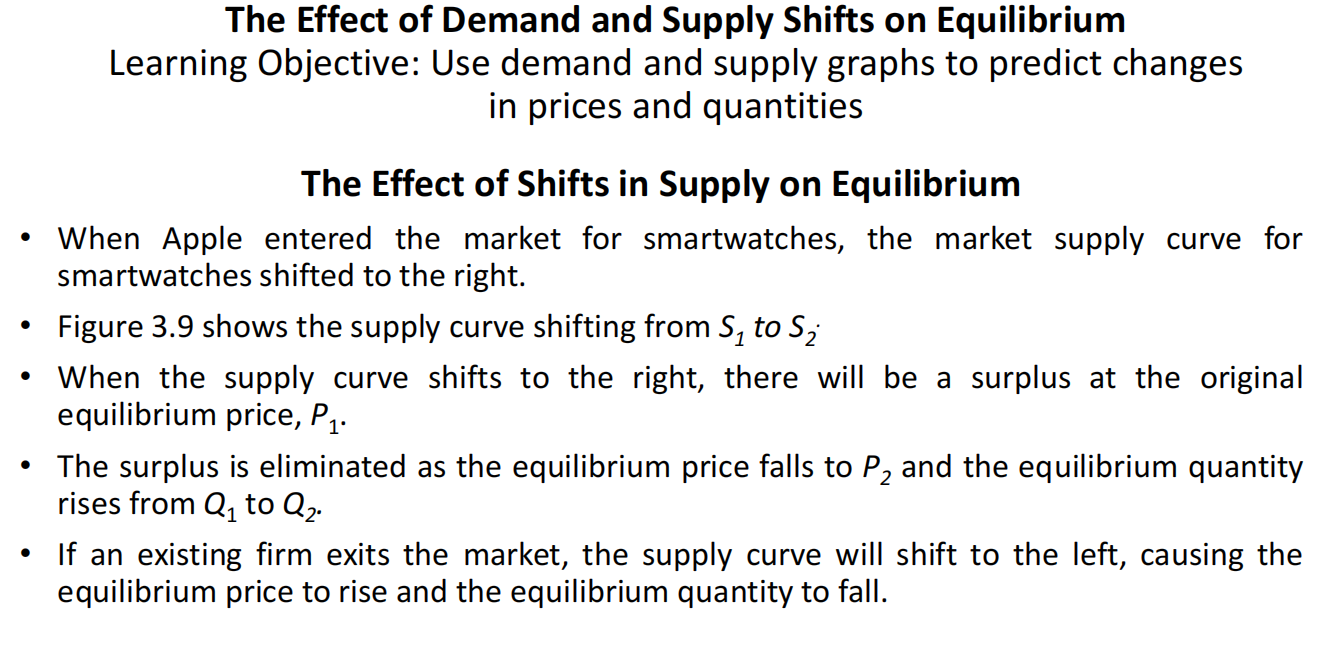
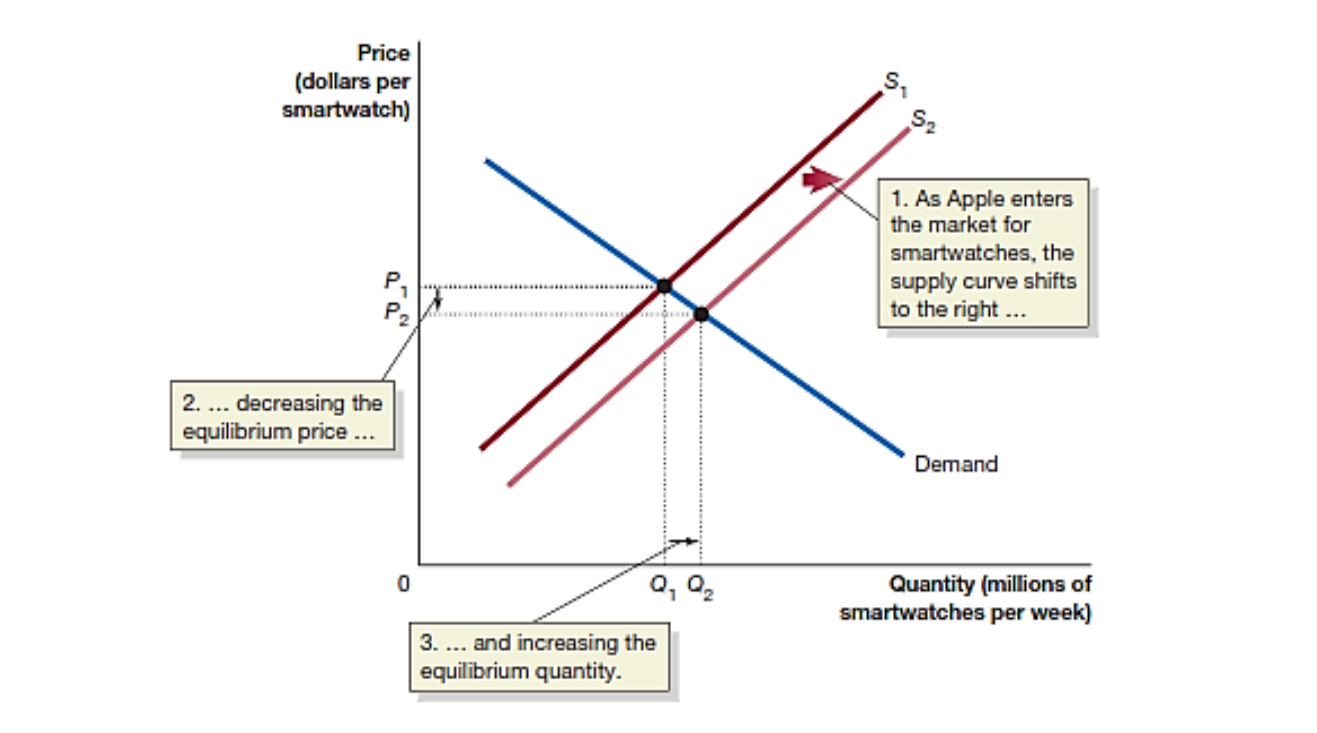
When Apple entered the market for smartwatches, the market supply curve for smartwatches shifted to the right.
📖 点击查看译文
当苹果进入智能手表市场时,智能手表的市场供给曲线向右移动。
Figure 3.9 shows the supply curve shifting from S1 to S2.
📖 点击查看译文
图 3.9 显示了供给曲线从 S1 移动到 S2。
When the supply curve shifts to the right, there will be a surplus at the original equilibrium price, P1.
📖 点击查看译文
当供给曲线向右移动时,原来的均衡价格 P1 处会出现过剩。
The surplus is eliminated as the equilibrium price falls to P2 and the equilibrium quantity rises from Q1 to Q2.
📖 点击查看译文
随着均衡价格降到 P2,均衡数量从 Q1 增加到 Q2,过剩被消除。
If an existing firm exits the market, the supply curve will shift to the left, causing the equilibrium price to rise and the equilibrium quantity to fall.
📖 点击查看译文
如果现有公司退出市场,供给曲线将向左移动,导致均衡价格上升,均衡数量下降。
知识点列表与拓展 (Knowledge Points and Extensions):
1. Supply Shift (供给变化)
-
解释 (Explanation):
A shift in the supply curve occurs when factors other than price, such as new market entrants or exits, affect the overall supply in the market.
(供给曲线的变化发生在价格以外的因素,如新市场参与者或退出,影响市场的整体供给时。)
-
例子 (Example):
When Apple entered the smartwatch market, the supply curve shifted to the right, leading to a surplus at the original price.
(当苹果进入智能手表市场时,供给曲线向右移动,导致原始价格处出现过剩。)
-
拓展 (Extension):
When the supply curve shifts to the right, the equilibrium price typically falls, and the equilibrium quantity increases. Conversely, when supply decreases (shifts to the left), the equilibrium price rises, and the equilibrium quantity decreases.
(当供给曲线向右移动时,均衡价格通常会下降,均衡数量增加。相反,当供给减少(向左移动)时,均衡价格上升,均衡数量下降。)
4
5
The Effect of Shifts in Demand on Equilibrium (需求变化对均衡的影响)
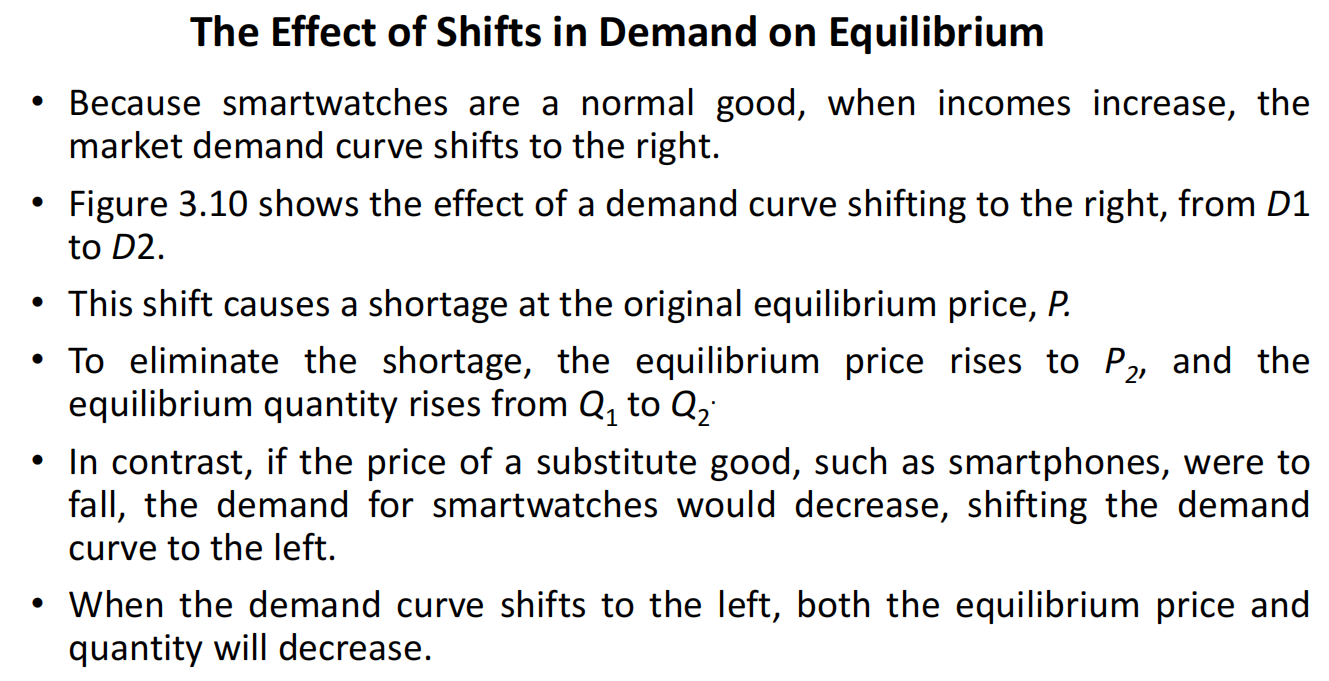
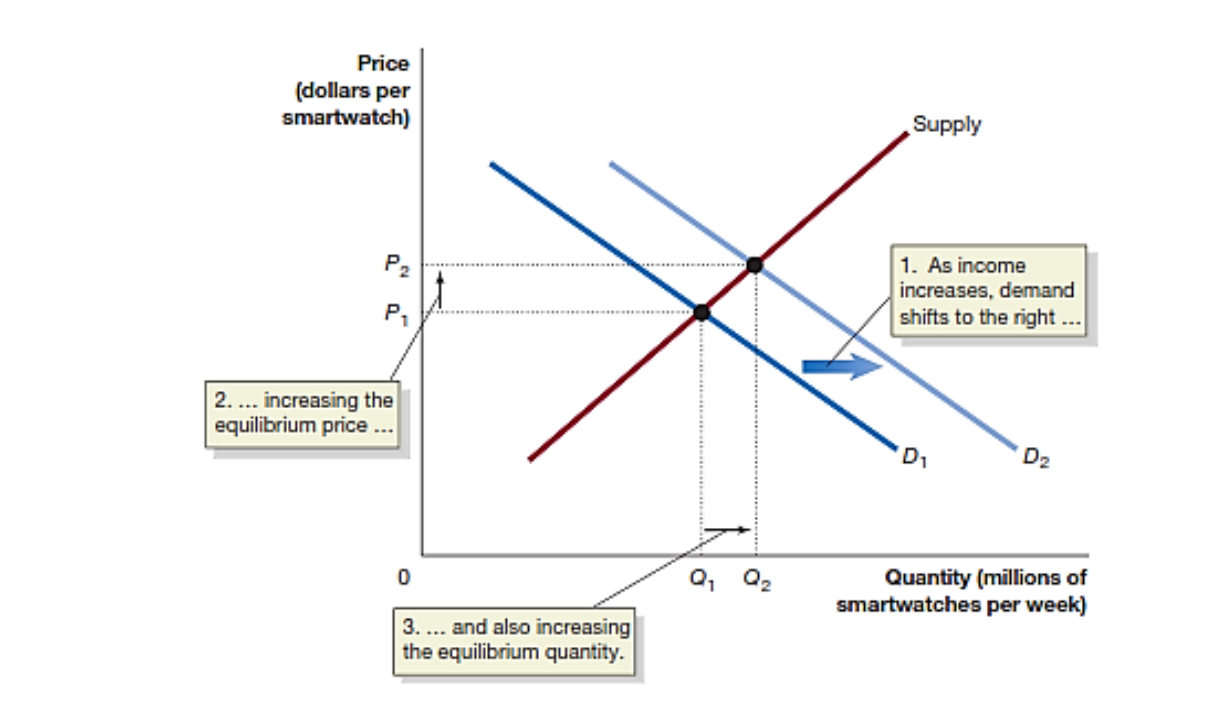
Because smartwatches are a normal good, when incomes increase, the market demand curve shifts to the right.
📖 点击查看译文
由于智能手表是正常商品,当收入增加时,市场需求曲线会向右移动。
Figure 3.10 shows the effect of a demand curve shifting to the right, from D1 to D2.
📖 点击查看译文
图 3.10 显示了需求曲线从 D1 向右移动到 D2 的效果。
This shift causes a shortage at the original equilibrium price, P.
📖 点击查看译文
这一变化导致在原均衡价格 P 处出现短缺。
To eliminate the shortage, the equilibrium price rises to P2, and the equilibrium quantity rises from Q1 to Q2.
📖 点击查看译文
为了消除短缺,均衡价格上升到 P2,均衡数量从 Q1 增加到 Q2。
In contrast, if the price of a substitute good, such as smartphones, were to fall, the demand for smartwatches would decrease, shifting the demand curve to the left.
📖 点击查看译文
相反,如果替代商品(如智能手机)的价格下降,智能手表的需求会减少,需求曲线会向左移动。
When the demand curve shifts to the left, both the equilibrium price and quantity will decrease.
📖 点击查看译文
当需求曲线向左移动时,均衡价格和数量都会减少。
知识点列表与拓展 (Knowledge Points and Extensions):
1. Demand Shift (需求变化)
-
解释 (Explanation):
A shift in the demand curve occurs when factors such as income, prices of substitute goods, or consumer preferences change.
(需求曲线的变化发生在收入、替代品价格或消费者偏好等因素发生变化时。)
-
例子 (Example):
When incomes increase, the demand curve for smartwatches shifts to the right, resulting in a higher equilibrium price and quantity.
(当收入增加时,智能手表的需求曲线向右移动,导致均衡价格和数量上升。)
-
拓展 (Extension):
When a substitute good’s price decreases, the demand for the original good tends to decrease, shifting the demand curve to the left and reducing both price and quantity.
(当替代品价格下降时,原商品的需求往往减少,需求曲线向左移动,价格和数量都会减少。)
6
7
The Effect of Shifts in Demand and Supply over Time (需求和供给随时间变化的影响)
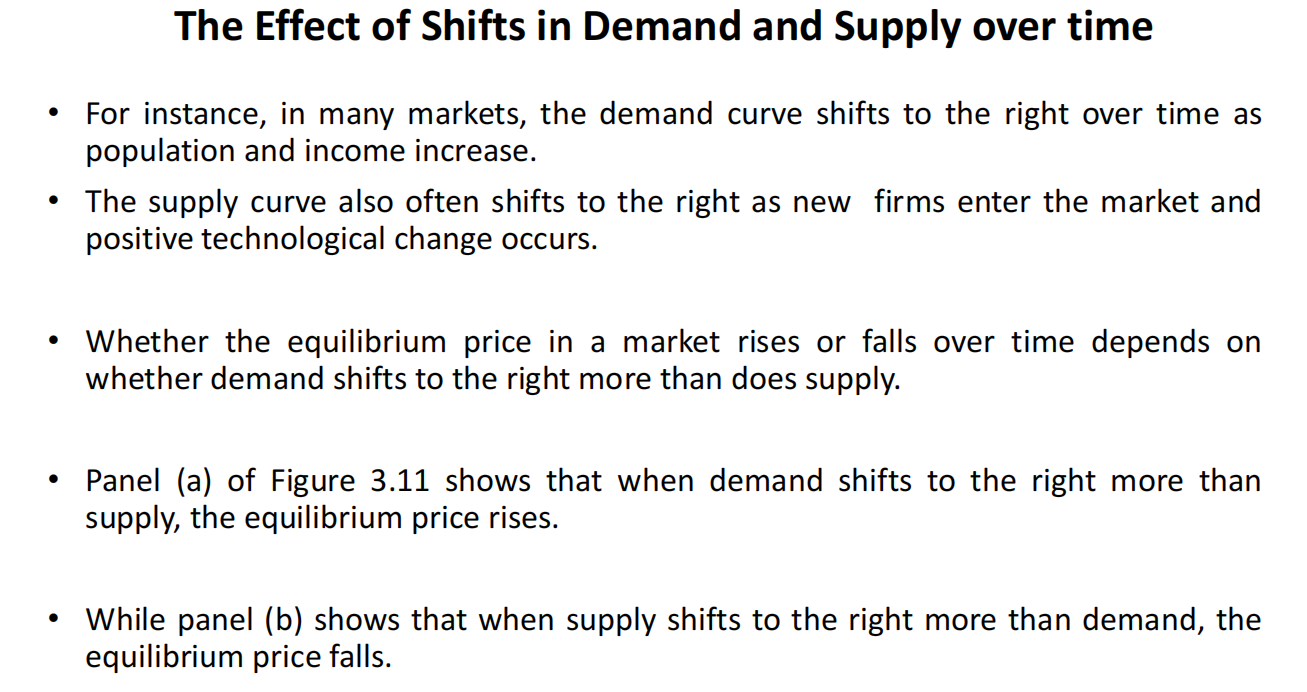
For instance, in many markets, the demand curve shifts to the right over time as population and income increase.
📖 点击查看译文
例如,在许多市场中,随着人口和收入的增加,需求曲线随时间向右移动。
The supply curve also often shifts to the right as new firms enter the market and positive technological change occurs.
📖 点击查看译文
供给曲线通常也会向右移动,因为新公司进入市场并出现积极的技术变革。
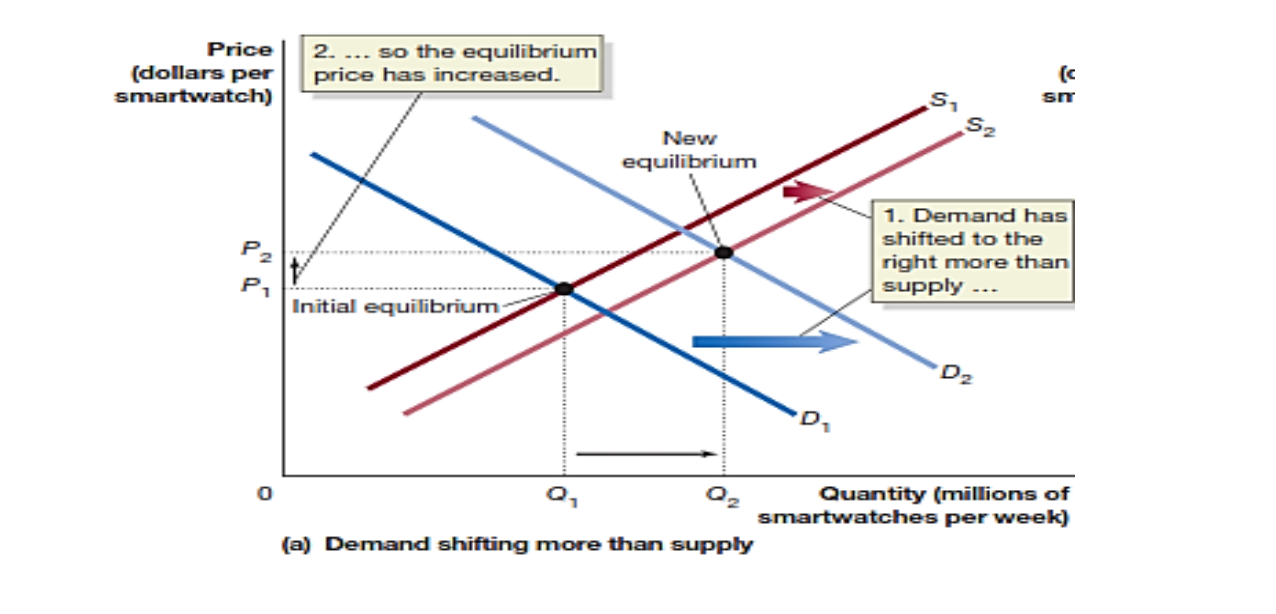
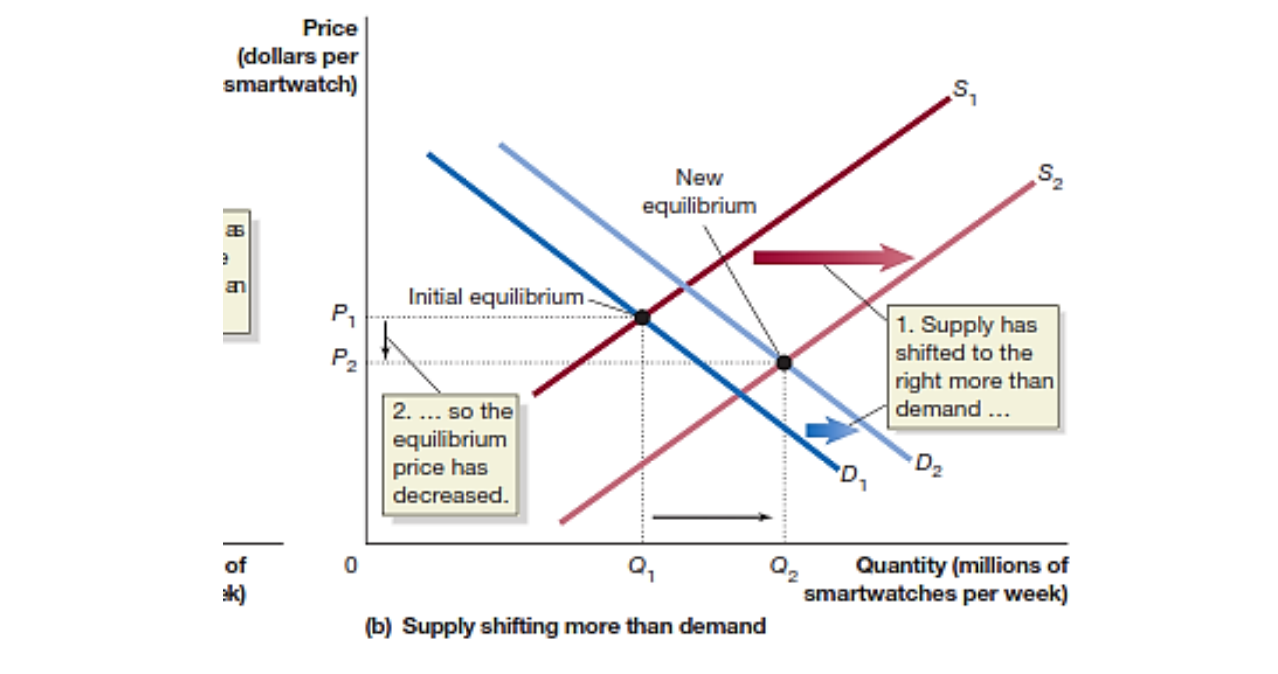
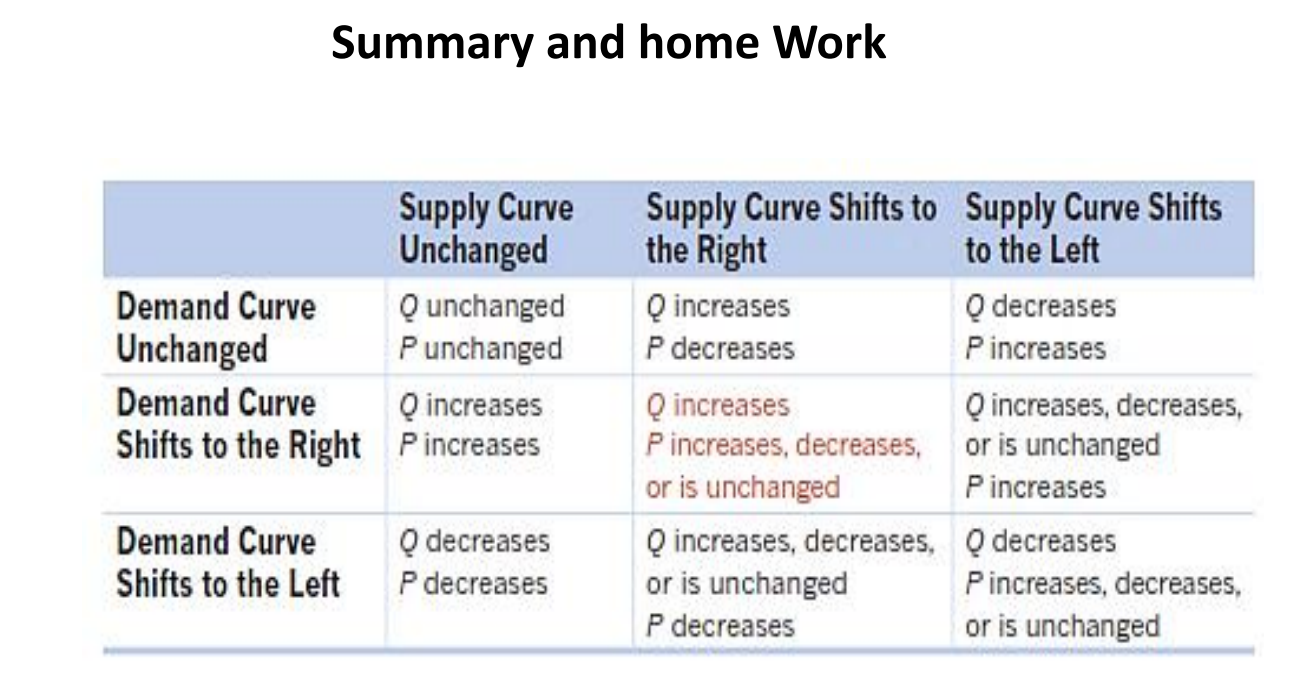
Whether the equilibrium price in a market rises or falls over time depends on whether demand shifts to the right more than does supply.
📖 点击查看译文
市场中均衡价格是上升还是下降,取决于需求曲线是否比供给曲线向右移动得更多。
Panel (a) of Figure 3.11 shows that when demand shifts to the right more than supply, the equilibrium price rises.
📖 点击查看译文
图 3.11 的面板 (a) 显示,当需求曲线比供给曲线向右移动得更多时,均衡价格上升。
While panel (b) shows that when supply shifts to the right more than demand, the equilibrium price falls.
📖 点击查看译文
而面板 (b) 显示,当供给曲线比需求曲线向右移动得更多时,均衡价格下降。
知识点列表与拓展 (Knowledge Points and Extensions):
1. Shifts in Demand and Supply Over Time (需求和供给随时间变化)
-
解释 (Explanation):
Over time, factors like population growth, income increase, technological advances, and new market entrants can shift the demand and supply curves, affecting equilibrium price and quantity.
(随着时间的推移,人口增长、收入增加、技术进步以及新市场参与者等因素可以改变需求和供给曲线,从而影响均衡价格和数量。)
-
例子 (Example):
As income rises, demand for goods increases, which shifts the demand curve to the right, potentially raising the equilibrium price if supply does not increase proportionally.
(随着收入的提高,商品的需求增加,需求曲线向右移动,如果供给没有按比例增加,可能会导致均衡价格上涨。)
-
拓展 (Extension):
The interaction of supply and demand shifts determines the long-term direction of equilibrium prices and quantities in a market. If supply increases faster than demand, prices will tend to fall. Conversely, if demand increases faster than supply, prices will tend to rise.
(供给和需求的变化互动决定了市场中均衡价格和数量的长期方向。如果供给增长速度快于需求,价格趋向下降。相反,如果需求增长速度快于供给,价格趋向上涨。)
8
因此,除非需求曲线或供给曲线发生变化,否则价格将没有变化的理由。
知识点列表与拓展 (Knowledge Points and Extensions):
1. Market Adjustment (市场调整)
-
解释 (Explanation):
When a market is not in equilibrium, price adjustments help move the market towards equilibrium by influencing the quantity supplied and demanded.
(当市场不处于均衡时,价格调整通过影响供给量和需求量帮助市场朝均衡移动。)
-
例子 (Example):
If the price is below $350, the shortage increases, pushing the price upward, which reduces the shortage and brings the market closer to equilibrium.
(如果价格低于 350 美元,短缺会增加,从而推动价格上升,减少短缺并使市场更接近均衡。)
-
拓展 (Extension):
Price adjustments in competitive markets occur when there is either a shortage or surplus, and they continue until market forces bring the price to the equilibrium point.
(在竞争性市场中,当出现短缺或过剩时,价格调整会发生,直到市场力量将价格带到均衡点为止。)
3

The Effect of Demand and Supply Shifts on Equilibrium (需求和供给变化对均衡的影响)
When Apple entered the market for smartwatches, the market supply curve for smartwatches shifted to the right.
📖 点击查看译文
当苹果进入智能手表市场时,智能手表的市场供给曲线向右移动。
Figure 3.9 shows the supply curve shifting from S1 to S2.
📖 点击查看译文
图 3.9 显示了供给曲线从 S1 移动到 S2。
When the supply curve shifts to the right, there will be a surplus at the original equilibrium price, P1.
📖 点击查看译文
当供给曲线向右移动时,原来的均衡价格 P1 处会出现过剩。
The surplus is eliminated as the equilibrium price falls to P2 and the equilibrium quantity rises from Q1 to Q2.
📖 点击查看译文
随着均衡价格降到 P2,均衡数量从 Q1 增加到 Q2,过剩被消除。
If an existing firm exits the market, the supply curve will shift to the left, causing the equilibrium price to rise and the equilibrium quantity to fall.
📖 点击查看译文
如果现有公司退出市场,供给曲线将向左移动,导致均衡价格上升,均衡数量下降。
知识点列表与拓展 (Knowledge Points and Extensions):
1. Supply Shift (供给变化)
-
解释 (Explanation):
A shift in the supply curve occurs when factors other than price, such as new market entrants or exits, affect the overall supply in the market.
(供给曲线的变化发生在价格以外的因素,如新市场参与者或退出,影响市场的整体供给时。)
-
例子 (Example):
When Apple entered the smartwatch market, the supply curve shifted to the right, leading to a surplus at the original price.
(当苹果进入智能手表市场时,供给曲线向右移动,导致原始价格处出现过剩。)
-
拓展 (Extension):
When the supply curve shifts to the right, the equilibrium price typically falls, and the equilibrium quantity increases. Conversely, when supply decreases (shifts to the left), the equilibrium price rises, and the equilibrium quantity decreases.
(当供给曲线向右移动时,均衡价格通常会下降,均衡数量增加。相反,当供给减少(向左移动)时,均衡价格上升,均衡数量下降。)
4

5

The Effect of Shifts in Demand on Equilibrium (需求变化对均衡的影响)
Because smartwatches are a normal good, when incomes increase, the market demand curve shifts to the right.
📖 点击查看译文
由于智能手表是正常商品,当收入增加时,市场需求曲线会向右移动。
Figure 3.10 shows the effect of a demand curve shifting to the right, from D1 to D2.
📖 点击查看译文
图 3.10 显示了需求曲线从 D1 向右移动到 D2 的效果。
This shift causes a shortage at the original equilibrium price, P.
📖 点击查看译文
这一变化导致在原均衡价格 P 处出现短缺。
To eliminate the shortage, the equilibrium price rises to P2, and the equilibrium quantity rises from Q1 to Q2.
📖 点击查看译文
为了消除短缺,均衡价格上升到 P2,均衡数量从 Q1 增加到 Q2。
In contrast, if the price of a substitute good, such as smartphones, were to fall, the demand for smartwatches would decrease, shifting the demand curve to the left.
📖 点击查看译文
相反,如果替代商品(如智能手机)的价格下降,智能手表的需求会减少,需求曲线会向左移动。
When the demand curve shifts to the left, both the equilibrium price and quantity will decrease.
📖 点击查看译文
当需求曲线向左移动时,均衡价格和数量都会减少。
知识点列表与拓展 (Knowledge Points and Extensions):
1. Demand Shift (需求变化)
-
解释 (Explanation):
A shift in the demand curve occurs when factors such as income, prices of substitute goods, or consumer preferences change.
(需求曲线的变化发生在收入、替代品价格或消费者偏好等因素发生变化时。)
-
例子 (Example):
When incomes increase, the demand curve for smartwatches shifts to the right, resulting in a higher equilibrium price and quantity.
(当收入增加时,智能手表的需求曲线向右移动,导致均衡价格和数量上升。)
-
拓展 (Extension):
When a substitute good’s price decreases, the demand for the original good tends to decrease, shifting the demand curve to the left and reducing both price and quantity.
(当替代品价格下降时,原商品的需求往往减少,需求曲线向左移动,价格和数量都会减少。)
6

7

The Effect of Shifts in Demand and Supply over Time (需求和供给随时间变化的影响)
For instance, in many markets, the demand curve shifts to the right over time as population and income increase.
📖 点击查看译文
例如,在许多市场中,随着人口和收入的增加,需求曲线随时间向右移动。
The supply curve also often shifts to the right as new firms enter the market and positive technological change occurs.
📖 点击查看译文
供给曲线通常也会向右移动,因为新公司进入市场并出现积极的技术变革。
Whether the equilibrium price in a market rises or falls over time depends on whether demand shifts to the right more than does supply.
📖 点击查看译文
市场中均衡价格是上升还是下降,取决于需求曲线是否比供给曲线向右移动得更多。
Panel (a) of Figure 3.11 shows that when demand shifts to the right more than supply, the equilibrium price rises.
📖 点击查看译文
图 3.11 的面板 (a) 显示,当需求曲线比供给曲线向右移动得更多时,均衡价格上升。
While panel (b) shows that when supply shifts to the right more than demand, the equilibrium price falls.
📖 点击查看译文
而面板 (b) 显示,当供给曲线比需求曲线向右移动得更多时,均衡价格下降。
知识点列表与拓展 (Knowledge Points and Extensions):
1. Shifts in Demand and Supply Over Time (需求和供给随时间变化)
-
解释 (Explanation):
Over time, factors like population growth, income increase, technological advances, and new market entrants can shift the demand and supply curves, affecting equilibrium price and quantity.
(随着时间的推移,人口增长、收入增加、技术进步以及新市场参与者等因素可以改变需求和供给曲线,从而影响均衡价格和数量。)
-
例子 (Example):
As income rises, demand for goods increases, which shifts the demand curve to the right, potentially raising the equilibrium price if supply does not increase proportionally.
(随着收入的提高,商品的需求增加,需求曲线向右移动,如果供给没有按比例增加,可能会导致均衡价格上涨。)
-
拓展 (Extension):
The interaction of supply and demand shifts determines the long-term direction of equilibrium prices and quantities in a market. If supply increases faster than demand, prices will tend to fall. Conversely, if demand increases faster than supply, prices will tend to rise.
(供给和需求的变化互动决定了市场中均衡价格和数量的长期方向。如果供给增长速度快于需求,价格趋向下降。相反,如果需求增长速度快于供给,价格趋向上涨。)
8


评论
0 条正在加载评论...